
Larkspur's older homes give its bathrooms a lot of character and a fair share of problems. The historic downtown along Magnolia Avenue is listed on the National Register of Historic Places, and many of the houses around it date from the early 1900s, with bathrooms that have been redone several times over the decades. Further up, homes along Baltimore Canyon sit under redwoods, where shade and damp keep bathrooms from drying out. Down near Corte Madera Creek, ground moisture is part of life. Across all of them, we find the same issues: old drain lines, framing softened by years of small leaks, and bathrooms that were never laid out for how people live now. Larkspur's newer homes, built in the 1960s and later along the hills toward Corte Madera, have their own list: original fiberglass tubs, single-sink vanities and fans that vent into the attic instead of outside.
We remodel bathrooms throughout Larkspur, from small cottages near downtown to larger homes in the hills. A lot of the work here is a tub-to-shower conversion in an older bathroom, or a primary bathroom remodel that adds space and storage. Some of our Larkspur projects are second bathrooms added to cottages that only ever had one, which takes careful planning around old drain lines. Reach out for an estimate, and we'll go over what your bathroom needs in person, then put the plan and price in writing.
Remodeling Bathrooms in Larkspur's Older Homes
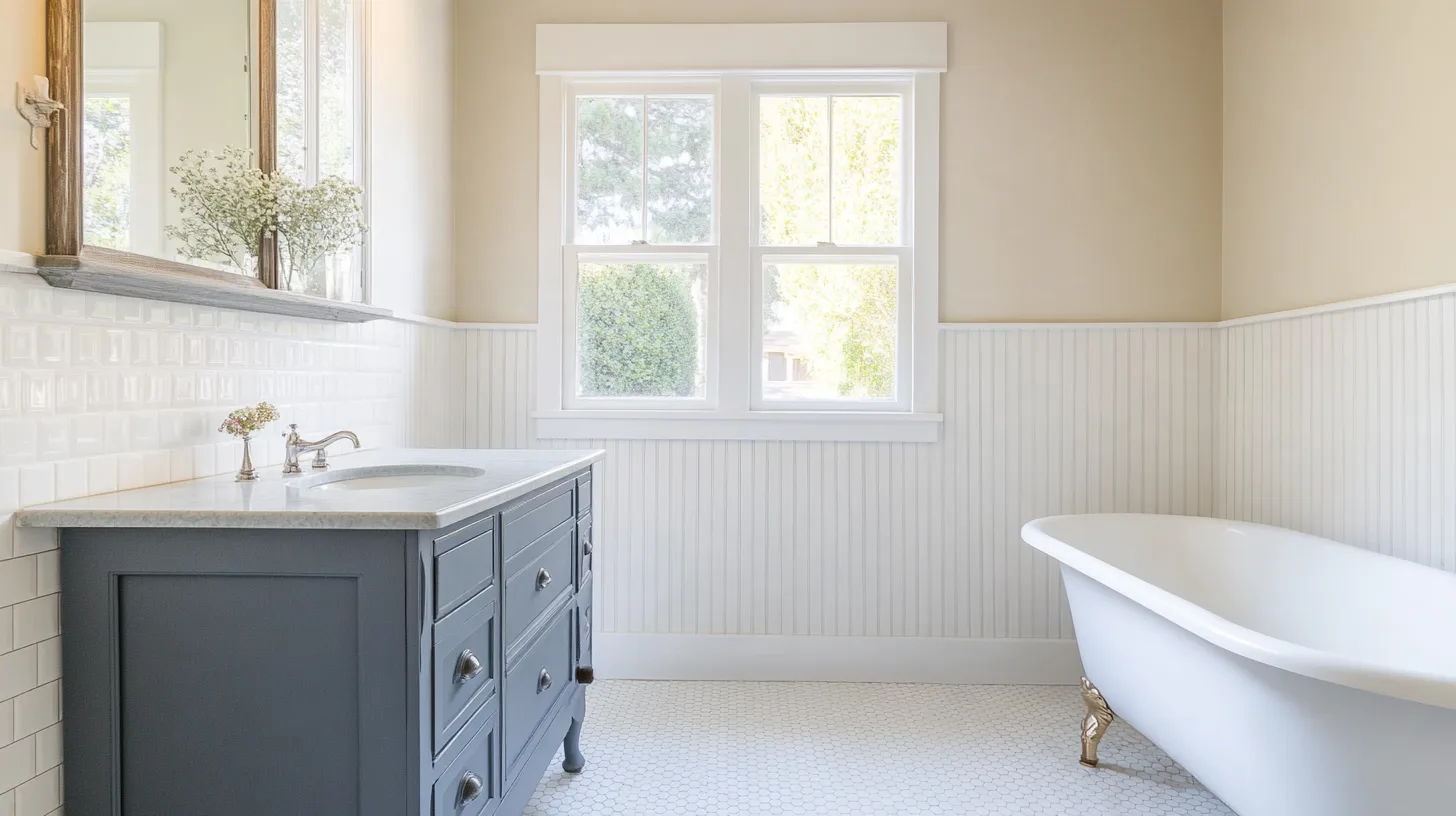
Early 20th-century houses come with their own set of surprises. Behind the tile, we often find plaster over wood lath, galvanized supply lines and cast-iron drains that have narrowed with decades of buildup. Floors may be out of level, and walls may not be square, which matters when you're setting large-format tile or ordering frameless glass. We check all of this before quoting, so your estimate reflects what's really behind the walls rather than a best guess. Many homeowners here want a bathroom that feels at home in an older house, with classic tile, a pedestal or furniture-style vanity and simple fixtures, while getting modern waterproofing and plumbing underneath. Hexagon floor tile and subway walls are popular choices that suit the era. Where an old window sits inside the shower, we either move it or replace it with tempered glass in a frame that can take daily water. If your house is in the historic district, exterior changes may draw extra review, but interior bathroom work generally goes through the regular permit process. Houses of a similar age in San Anselmo bring many of the same challenges.
Baltimore Canyon and Shaded Lots
Homes up Baltimore Canyon and in other shaded parts of Larkspur stay cool and damp much of the year, and bathrooms feel it first. Mold along the ceiling, peeling paint and swollen vanity doors are the usual signs. The fix starts with ventilation: a fan vented outdoors that's strong enough for the room and set to run until the humidity drops, not just while the light is on. Below that, we check the subfloor and joists under the shower and toilet, since a lot of canyon houses are built over crawlspaces where moisture builds up through the wet months. In the shower itself, a continuous waterproofing membrane and a properly sloped pan keep water where it belongs. Choosing a vanity built from plywood instead of particleboard helps too, since particleboard swells the first time it gets damp. Mirrors and light fixtures rated for damp locations are worth the small extra cost in a room like this. A walk-in shower with frameless glass also lets more light into a shaded room. Larkspur's building department handles bathroom permits, and our crew pulls the permit and meets the inspector at each stage.