
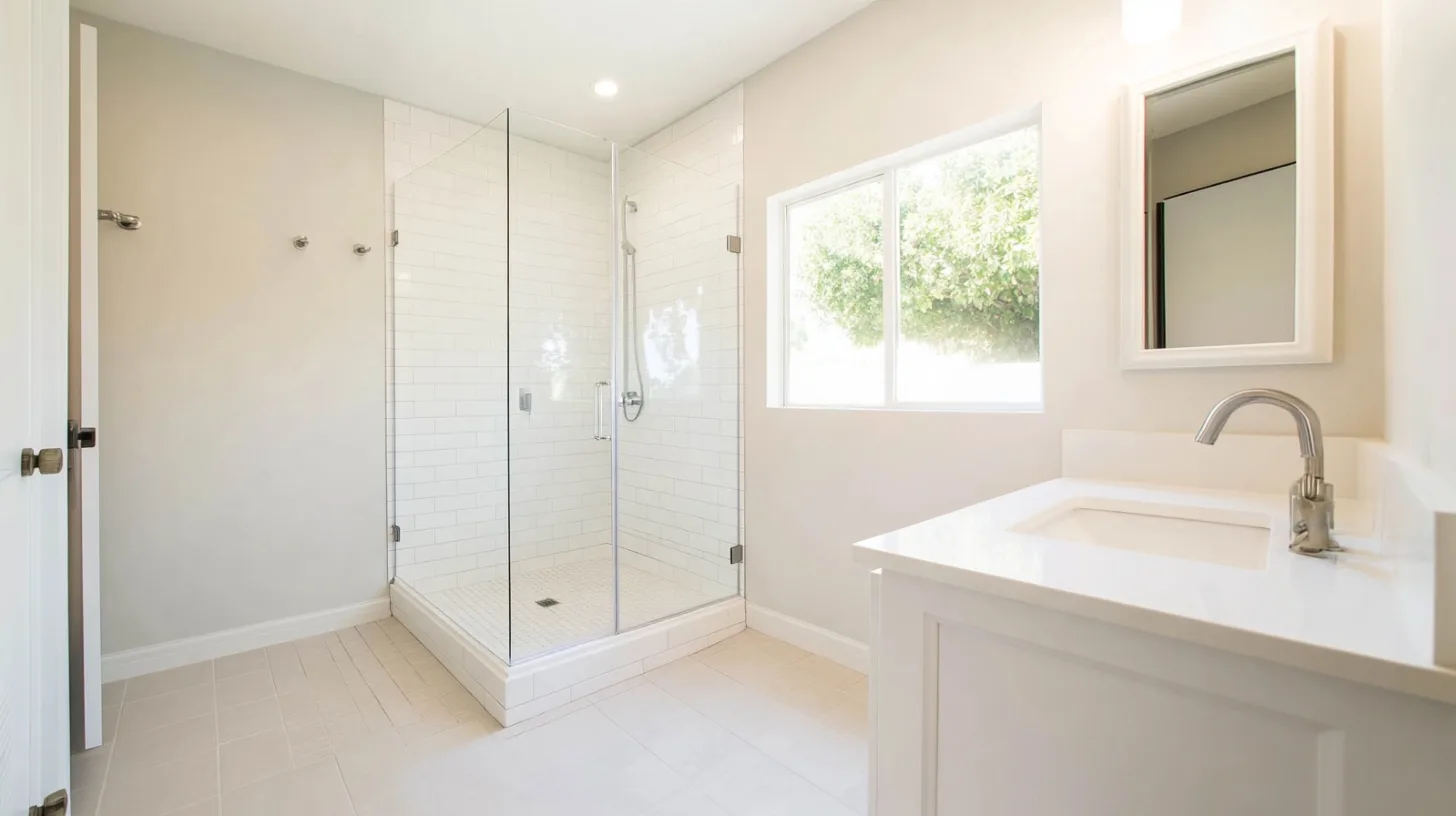
A good walk-in shower changes the whole feel of a bathroom. No curtain, no high tub wall to step over, just open glass and room to move. The trouble is that a shower is also the hardest-working, wettest spot in the house, and a pretty one built badly starts leaking quietly behind the tile within a few years. Most of the showers we tear out in Marin failed for the same reasons: a pan that didn't slope properly, a seam in the waterproofing, or grout doing a job it was never meant to do. In hillside homes in Mill Valley, where the bathroom is often built over a crawlspace, that slow leak shows up as rotted joists. In slab-floor ranch houses in Novato, it shows up as a stained carpet in the next room. A walk-in shower is worth doing, and worth doing right.
This page walks through the signs your current shower needs replacing, how curbless and low-curb showers differ and what each takes to build, how we install a walk-in shower step by step, and the glass, tile and storage choices that make one easy to live with. Walk-in showers are the centerpiece of most primary bathroom remodels we build, so that page is a good companion to this one.
Signs Your Shower Needs Replacing
Start at the grout. If it keeps cracking or turning dark at the bottom row no matter how often you clean it, water is likely sitting behind the tile. Caulk that peels away from the tub or shower base within months points to the same thing. Check the wall on the other side of the shower, too. Bubbling paint, a soft spot in the drywall or a musty smell in a closet next door are all signs the waterproofing has failed. Fiberglass shower inserts tell their own story: once they crack or flex underfoot, they can't really be fixed. And if the shower is small enough that you bump your elbows washing your hair, or the door swings into the bathroom and hits the toilet, it's not just worn out. It never fit the room.
Curbless or Low-Curb? What Each One Takes
A low-curb shower has a short lip, usually a few inches tall, that keeps water in. It's the simpler build and works in almost any bathroom. A curbless shower has no lip at all; the bathroom floor runs straight into the shower. That looks clean and is easier to walk into, but water still has to drain toward the shower and nowhere else. To pull that off, the shower floor gets recessed below the rest of the bathroom floor, which in a home built over a crawlspace often means lowering the floor framing in that area. A slab floor has to be cut. Either way, the shower floor slopes gently toward the drain, typically about a quarter inch per foot, and many curbless showers use a long linear drain along one wall so the slope only runs in one direction. Code still applies to both styles: a door can't swing into the shower, and the valve has to be reachable without stepping into the spray.
How We Install a Walk-In Shower
We begin by taking the old shower out down to the studs and the subfloor, then repair any rot we find before building anything new. If the shower is going curbless, this is when we recess the floor. The drain and the new valve go in next, along with blocking in the walls for a bench, a grab bar or glass hardware, so nothing ends up anchored only to tile. After the rough plumbing inspection, we hang cement board and apply a waterproofing membrane from the drain up to at least 70 inches, then flood test the pan overnight. Tile goes on once it passes, with smaller tiles on the floor so they follow the slope and give your feet some grip. Fixtures and trim follow, then we measure for frameless glass and set it once it's made.
Glass, Tile and Storage That Last
The choices you make here decide how easy the shower is to keep clean. Frameless glass, which has to be tempered, has no metal frame to trap soap scum and lets light through the whole room. A fixed glass panel with an open entry skips the door altogether if the shower is long enough to keep the spray inside. For tile, porcelain is the workhorse: dense, stain resistant and fine with daily soaking. Natural stone looks great but needs sealing. Built-in niches, set between the wall studs, give you shelf space without a hanging caddy, and a bench built into the framing is far sturdier than a stool. A handheld showerhead on a slide bar makes cleaning the walls and rinsing off the bench easy.
If you're replacing a bathtub to make room for one, our tub-to-shower conversion page covers that project specifically.
Common Questions
Not when they're built correctly. The water stays in a curbless shower because the floor is recessed and sloped toward the drain, not because a lip holds it back. Problems happen when a curbless shower is set on a floor that wasn't lowered, so the slope is too shallow, or when the waterproofing stops short of the bathroom floor beyond the shower. We extend the membrane past the shower opening and use a linear drain where the layout calls for one.
Not always. A shower that's long enough, often around five feet, can use a single fixed glass panel with an open end and keep the water inside, especially with the showerhead aimed away from the opening. Shorter showers usually need a door. If there is one, code says it has to swing out of the shower, not in, and the glass has to be tempered. We'll look at your layout and tell you which option fits.
Small tiles, usually two inches or so, work best on a shower floor. The extra grout lines give your feet grip, and small pieces follow the slope toward the drain without rocking. Porcelain mosaic is the most popular choice because it's dense, stain resistant and comes in finishes rated for wet floors. Pebble and natural stone floors look great but take more sealing. Large tiles can work on walls, but on the floor they fight the slope.